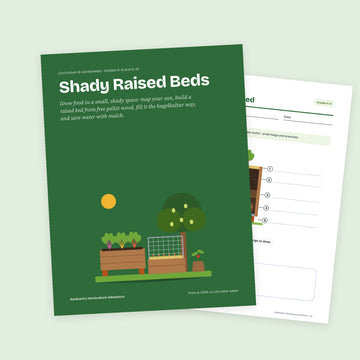
Shady Raised Beds – Digital Curriculum & Worksheets Only (Printable PDF Download, No Kit or Physical Items Included, Grades K–12)
- 📚 Curriculum included:
- Lesson plan
- Printable worksheets
- Grades K–5 or 6–12
- Look inside ›
Digital download only. Nothing is shipped. This is a printable PDF curriculum and worksheets; no kit or physical items are included.
Can you grow food in a small, shady yard? Kids find out by tracking the sun and shadows, building a raised bed layer by layer, testing whether mulch really saves water and inviting garden helpers like frogs and ladybirds. The garden method follows GrowVeg's video "Raised Bed Masterclass: Grow Food in Any Space," a tour of a very shady garden grown almost entirely in homemade raised beds and containers.
What's inside (32-page full-color PDF)
- Parent and teacher guide: background, materials list, safety, step-by-step raised bed build and hugelkultur fill, a what-to-grow-where light chart and troubleshooting
- Family extras: first-weeks plan, a fair-test mulch experiment with results table, garden doctor and a weekly care chart
- 5 lessons for Grades K–5 (sun detectives, shade plants, a bed in a jar, mulch, garden helpers)
- 5 lessons for Grades 6–12 (light mapping, photosynthesis and yield, hugelkultur by the numbers, the water budget of a bed, food webs)
- 6 worksheets (3 for K–5, 3 for 6–12, including a lab report), an answer key and a lab report rubric
- An Official Shady Garden Grower certificate
What kids will learn
Grades K–5
- Shadows move as the sun crosses the sky, so some spots are sunny in the morning and shady later
- Leafy plants can grow with less sun than fruiting plants
- Logs and twigs decompose into food for plants
- Mulch keeps water in the soil, and frogs, ladybirds and bees help the garden
Grades 6–12
- Map sun hours and microclimates and explain them with Earth's rotation
- Explain light as a limiting factor in photosynthesis and crop yield
- Model decomposition and nutrient cycling, and calculate bed volume and compost savings
- Design a controlled experiment on mulch and water loss, and analyze garden food webs
Supplies you gather yourself
- A raised bed or large containers (or HT-stamped pallet wood, screws and bricks to build one)
- Logs, branches and twigs, compost and straw mulch
- Seeds or young plants, such as lettuce, chard or kale
- Two identical containers, potting mix and a kitchen scale for the experiment
- A ruler, sticks or chalk, and a watering can
Format
Instant download after checkout. Full-color PDF, US Letter size. Print as many copies of the worksheets as your family or class needs.
Join the community
Every purchase comes with an invitation to our Facebook group, Aardvark's Seed Planting For Little Hands, where kids and parents can get support with anything they need.
All sales of digital products are final. Because the files are delivered instantly as downloads, digital products are not eligible for returns or refunds. If you have trouble downloading your file, email aleksandr.gordon@gmail.com and we will help.